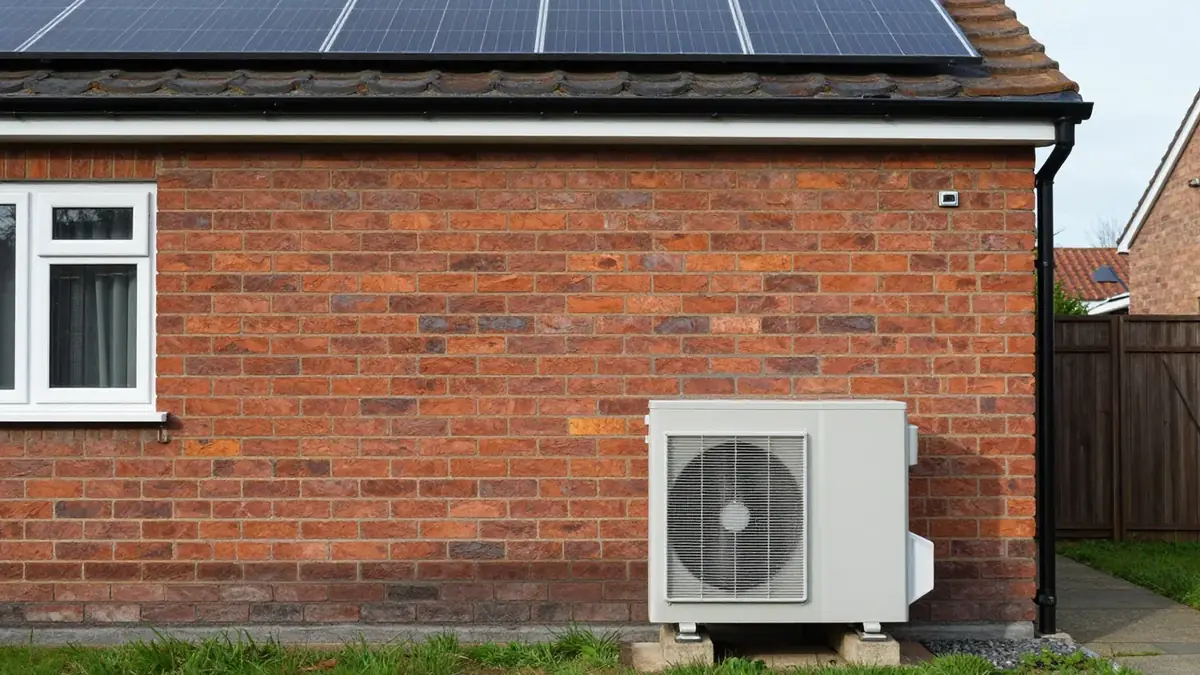
Solar panels can run part of a heat pump, but not much of it in winter. PVGIS suggests the six months from October to March bring about a third of a year’s output, just when heating demand peaks. Panels cut the bill most in spring and autumn.
The timing problem
A heat pump works hardest on cold days. Those fall in the darkest months, when panels make the least. Therefore the two sit out of step for much of the year.
PVGIS shows how wide the gap is. Its monthly figures for Exeter run from 35.2 kWh per kWp in December to 127.8 in May. A 4 kWp roof there gives about 141 kWh in December, while May gives about 511 kWh.
Across the year the pattern is steady. December to February make about 540 kWh on that system, which is under 13% of the 4,208 kWh annual total. June to August, however, make about 1,456 kWh, or roughly 35%.
Two cities, the same shape
Cambridge tells the same story. PVGIS gives it 1,041 kWh per kWp a year, so a 4 kWp system makes about 4,164 kWh. October to March bring about 1,362 kWh of that, roughly a third.
Exeter gives a similar split, with about 1,375 kWh from October to March on a 4,208 kWh year. For anyone weighing solar panels in Exeter, the heating months look thin. The same applies to a solar installation in Cambridge, since both sit in the south and east of England.
The two cities differ by only 11 kWh per kWp over a year. That gap is small, so your own roof direction and shade will move the numbers far more than the city.
What the heating months are worth
Even a thin winter yield has some value. At the Ofgem price cap unit rate of 26.32p per kWh, at the time of writing, 540 kWh is worth about £142. That counts only if you use those units yourself, since exported units earn less.
Energy Saving Trust says the typical Smart Export Guarantee rate is around 12p per kWh. The Smart Export Guarantee guide shows how to compare supplier tariffs. The price cap changes every quarter, so check the current rate before you do any sums.
A heat pump also changes your electricity bill in a way that is hard to predict from solar data alone. Ask the installer for an estimate of its yearly electricity use. Then compare that with the kWh your panels make in the months you need it.
How much of a typical home’s electricity could solar cover
Ofgem’s typical household uses 2,500 kWh a year of electricity, using the medium value that applies from July 2026 (Ofgem). A heat pump moves the heating load onto the electricity meter, so the total rises.
Because the total rises, a bigger share of the extra load lands in months when panels make less. A larger array helps, but it will not close the winter gap. Roof area limits the size anyway. The solar panel installation service page is a good place to start.
The post on how much electricity a 4kW solar system generates shows the summer and winter swing for a typical roof. Use it alongside your own heat pump estimate.
Where a battery fits
A battery stores spare midday solar and releases it in the evening. That helps in spring and autumn, since the sun is up but nobody is home to use it. The solar battery storage page sets out how home batteries work.
In winter a battery has little to store because the panels make little, and it cannot add what they did not make. DESNZ data shows median retrofit battery costs of about £890 per kWh for 6 to 11 kWh units. Check that the return is real before you buy.
Installing solar panels and batteries in a home is zero-rated for VAT until 31 March 2027, according to HMRC guidance. The 5% rate returns after that date unless the rules change. The guide to whether a battery is worth it weighs these costs.
Grants and which nations they cover
The Boiler Upgrade Scheme gives £7,500 off an air-to-water heat pump in England and Wales. It rises to £9,000 for eligible off-gas-grid homes until 31 March 2027, per Ofgem. It applies to the heat pump, not to solar panels.
The scheme does not cover Scotland or Northern Ireland. Scottish readers should therefore check Home Energy Scotland, and a coming guide to solar panels in Scotland looks at the local picture. Rules and amounts change, so confirm them before you commit.
An installer who fits both systems can plan the electrics once. However, ask each firm whether it holds MCS certification for each technology. You can check this on the MCS Find an Installer search.
Reading the result
Once both systems run, your inverter app shows what the panels make hour by hour. Compare that with your heat pump’s use on a cold day. An upcoming guide to reading your solar inverter app explains the screens.
Next steps
Try the yield calculator first. It gives you a yearly kWh estimate for your roof, which you can set against the heat pump’s expected use.
When you want site-specific advice, get quotes from MCS-certified installers. Solar Yield passes your enquiry on and does not install anything. Ask each firm to size the panels against your total use, heat pump included.